
Blogs
List of Car Care Products That Actually Matter
Jun
A wash bay that runs short on the right chemical usually tells on the vehicle straight away. Dirty glass streaks, brake dust left in the wheel face, greasy engine bays and trim that looks tired all point to the same issue – an incomplete list of car care products. Whether you are buying for a workshop, detailing setup, dealership or transport fleet, the goal is not to stock everything. It is to carry the products that do the job properly, safely and without wasting labour.
The most useful way to build a product range is by task. Cars, utes, vans and heavy vehicles all need the same core cleaning stages, but the soil load, surface type and turnaround time can vary a lot. A private vehicle getting a weekend clean is one thing. A road-going fleet dealing with diesel grime, brake dust and weather exposure is another. That is why a smart product list focuses on purpose, compatibility and consistency rather than hype.
List of car care products by job
Start with exterior washing. This is the foundation of any vehicle care programme, and it is where many avoidable problems begin. A proper vehicle wash removes traffic film and road grime without stripping protection or marking sensitive finishes. For regular maintenance, a quality wash detergent is the first essential. If you are dealing with heavier contamination, a stronger pre-wash or traffic film remover helps reduce the amount of scrubbing required.
This matters because using one aggressive product for every wash is rarely efficient. It may save a few minutes on one vehicle, then create extra work on the next by dulling dressings or interfering with wax and polish layers. In trade environments, matching the wash strength to the soil level usually gives better results and better product control.
Wheel and tyre care deserves its own category. Wheels collect some of the toughest contamination on the vehicle – brake dust, road tar, grease and general road grime. A dedicated wheel cleaner helps lift that build-up far more effectively than standard shampoo alone. For tyres, a cleaner or degreaser is often needed to strip old dressing and brown residue before any new finish is applied.
There is a trade-off here. Strong wheel acids or harsh cleaners can be effective on neglected wheels, but they are not the right answer for every surface. Coated, polished or damaged finishes may require a gentler formula and more careful agitation. If you manage mixed fleets or customer vehicles, that flexibility matters.
Glass care is another non-negotiable. Windscreens, side glass and mirrors need a glass cleaner that cuts road film, finger marks and interior haze without leaving residue. In passenger cars this is mostly about presentation and visibility. In commercial vehicles it is also about driver confidence and day-to-day safety. A poor glass cleaner can leave streaking in low sun or at night, which is when complaints usually start.
Interior care is broader than many buyers expect. Upholstery, plastics, vinyl, rubber mats and carpets all respond differently. A reliable list of car care products should include an interior cleaner for hard surfaces, a carpet or fabric cleaner for soft trim, and a deodoriser for vehicles that need odour control after spills, food use or heavy daily traffic. If your vehicles carry staff, clients or the public, interior presentation reflects directly on operational standards.
It also pays to separate cleaning from finishing. A dashboard cleaner that leaves too much shine can create glare. A dressing that works well on exterior trim may be unsuitable on steering wheels or pedals. Professional results usually come from choosing products for the surface, not forcing one dressing across the whole cabin.
The core categories worth keeping on hand
If you are building a dependable working range, the essential categories usually include wash detergents, pre-washes, wheel cleaners, tyre cleaners, glass cleaners, interior cleaners, carpet cleaners, degreasers, engine cleaners, polishes, waxes, dressings, deodorisers, brake cleaners, hand cleaners and the right accessories.
Degreasers and engine cleaners are especially useful in workshops, transport yards and heavy-use environments. They cut through oil, grease and built-up grime around engines, chassis areas and workshop-contact surfaces. The key is to use them with care. Some degreasers are designed for heavy contamination and need correct dilution or rinsing practices. Others are better suited to lighter maintenance work where surface safety is more important than outright bite.
Brake cleaner sits in a separate class. It is not a general-purpose cleaner and should not be treated like one. Its role is specific – removing brake dust, oil and residue from braking components and related parts where a quick-drying, residue-free finish is required. For workshops and service operations, that makes it a practical staple.
Polishes and waxes come in at the finishing end of the process. A polish is used to improve paint appearance by reducing oxidation, light defects or dullness. A wax or paint protection product helps maintain gloss and add a sacrificial layer against the elements. Not every vehicle needs machine correction or a high-gloss finish, but many do benefit from some level of paint protection, especially vehicles exposed to sun, road grime and frequent washing.
Dressings round out the finish. Tyre shine, exterior trim dressings and vinyl finishes can improve presentation quickly, but the best result depends on restraint. Over-application tends to attract dust, sling onto paintwork or leave surfaces looking greasy. In fleet work, a clean satin finish is often more practical than maximum gloss.
Accessories matter as much as chemicals
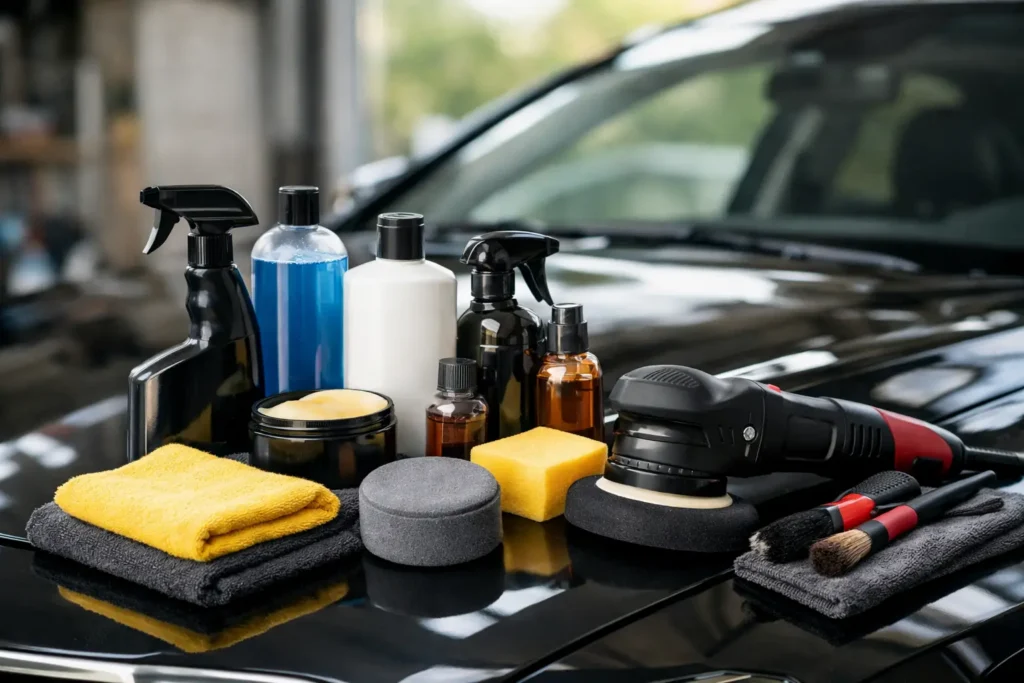
A good chemical applied with the wrong tool still gives a poor result. Any serious list of car care products should be backed by wash mitts, buckets, brushes, spray bottles, trigger heads, microfibre cloths, drying towels, applicator pads and vacuums or extraction tools where interior work is involved.
This is where efficiency is often won or lost. Separate cloths for glass, paint and interiors reduce cross-contamination. Proper wheel brushes clean faster and more safely than improvised tools. Decent triggers and labelled bottles help staff use the right dilution and avoid product waste. For buyers responsible for teams, accessories are not an afterthought. They are part of process control.
Choosing products for cars, utes and fleets
The right product mix depends on your operating environment. A detailing business may need a wider spread of finish-focused products, including multiple polishes, waxes and trim restorers. A workshop may place more value on degreasers, brake cleaners, hand cleaners and fast-turnaround interior products. A transport operator is likely to focus on wash strength, wheel care, glass performance and products that hold up under regular commercial use.
Local conditions matter too. Vehicles working through wet weather, rural roads, coastal air or heavy freight routes collect different contamination. That is why professional buyers often favour product systems that have already proven themselves in real workshop and fleet settings, rather than relying on general retail products built for occasional home use.
It is also worth thinking about standardisation. If you can reduce overlap and train staff around a clear product set, you improve consistency. Too many similar products can create confusion, incorrect use and unnecessary storage. Too few can mean staff push one chemical into jobs it was never meant to do. The balance is practical, not theoretical.
What a complete list of car care products should achieve
A complete product range should do three things well. First, it should cover the full vehicle, from paint and glass to interiors, wheels and mechanical cleaning tasks. Second, it should support different levels of contamination without forcing harsh solutions where they are not needed. Third, it should be easy for the user to apply consistently across cars, light commercial vehicles and larger fleet units.
That last point is often overlooked. Product performance is not just about what happens on one vehicle after one clean. It is about whether the results can be repeated by different staff, across different vehicle types, with predictable outcomes. In a trade environment, consistency beats novelty every time.
For many buyers, the smartest approach is to work from a shortlist of proven categories, then add specialist products only where there is a clear operational need. That keeps the range manageable and ensures every item on the shelf earns its place. SuperShine has built its reputation around that practical standard – supplying professional-grade vehicle care products that meet real cleaning conditions without unnecessary complexity.
If you are reviewing your current setup, start with the jobs that create the most rework, complaints or wasted time. The right product list usually reveals itself there, and once those problem areas are covered, the rest of the cleaning process becomes a lot easier to manage.
