
Blogs
Car Care Products Review for Real-World Use
Jun
A wash bay tells the truth fast. If a shampoo leaves road film behind, a glass cleaner smears in cold conditions, or a dressing fades by the next run, the label stops mattering. That is why any useful car care products review needs to focus on performance under real workshop, fleet and roadside conditions, not just shelf appeal.
For professional buyers and serious vehicle owners, the right product is rarely the one with the loudest claims. It is the one that does the job consistently, works with your process, and does not create extra labour. A good cleaner saves time. A poor one shifts the work somewhere else, whether that is rewashing panels, chasing residue, or dealing with avoidable surface damage.
What a car care products review should actually assess
Most reviews lean too heavily on first impressions. In practice, vehicle care products need to be judged on five things: cleaning strength, surface safety, ease of use, consistency, and suitability for the operating environment.
Cleaning strength sounds simple, but it varies by soil type. A product that handles light dust well may struggle with diesel film, brake dust or greasy workshop residue. Surface safety matters just as much. Strong chemistry can cut through grime quickly, but if it dulls trim, stains aluminium or shortens the life of coatings, it is not a good result.
Ease of use is often underrated. Dilution rates, dwell time, rinse behaviour and odour all affect productivity. In a busy workshop or fleet yard, products need to work without fuss. Consistency is another deciding factor. If one drum performs well and the next one behaves differently, that creates problems for staff, workflow and finish quality.
Then there is suitability. New Zealand and Australian conditions can be hard on vehicles – UV, coastal salt, rural mud, urban brake dust and long-haul road grime all place different demands on chemical performance. A product that works in a controlled showroom setting may not hold up on a truck linehaul route or a ute used on mixed terrain.
Exterior wash products: where efficiency is won or lost
A standard wash product should remove common contamination without stripping protection or forcing excessive agitation. In a professional setting, that balance matters. Too mild, and staff compensate with more scrubbing. Too aggressive, and the finish pays for it over time.
For cars and light commercial vehicles, quality wash products should rinse clean, leave minimal residue and perform reliably across painted panels, plastics and trim. Foam output can help with coverage, but foam alone is not the measure of quality. Plenty of products produce heavy suds without delivering meaningful cleaning power.
For trucks and fleet vehicles, the test is tougher. Road film, diesel residue and bug build-up need chemistry designed for heavy-duty use. This is where purpose-built transport washes and traffic film removers tend to separate themselves from general retail products. Used correctly, they reduce labour and improve consistency across larger vehicles. Used carelessly, they can be too harsh for repeated use on sensitive finishes. That trade-off matters.
The right wash chemistry depends on the job
Neutral shampoos are a sensible choice for regular maintenance washing, especially on protected vehicles. Alkaline cleaners have a place when heavier grime needs to be shifted. Solvent-assisted products can be useful for tar and stubborn residues, but they should be targeted, not treated as a default step.
That is the broader pattern across any wash system: the best product is often not the strongest one. It is the one matched properly to the level and type of contamination.
Wheel and tyre cleaners: strong results, higher risk
Wheel cleaning products are one of the easiest categories to get wrong. Brake dust, baked-on grime and tyre browning often need stronger chemistry, but wheels also present a mix of delicate finishes – painted, polished, clear-coated and bare alloy.
A sound wheel cleaner should break down contamination quickly, rinse freely and avoid staining or etching when used as directed. If it relies on prolonged dwell or heavy brushing to work, it may not be efficient enough for trade use. On the other hand, very aggressive wheel acids can create their own problems if staff are undertrained or turnaround times are rushed.
Tyre cleaners should remove old dressing, road grime and bloom without leaving the rubber chalky. A clean tyre surface is what gives dressings a better bond and more even finish. If the tyre prep is poor, the dressing often gets blamed unfairly.
Interior products: speed matters, but finish matters more
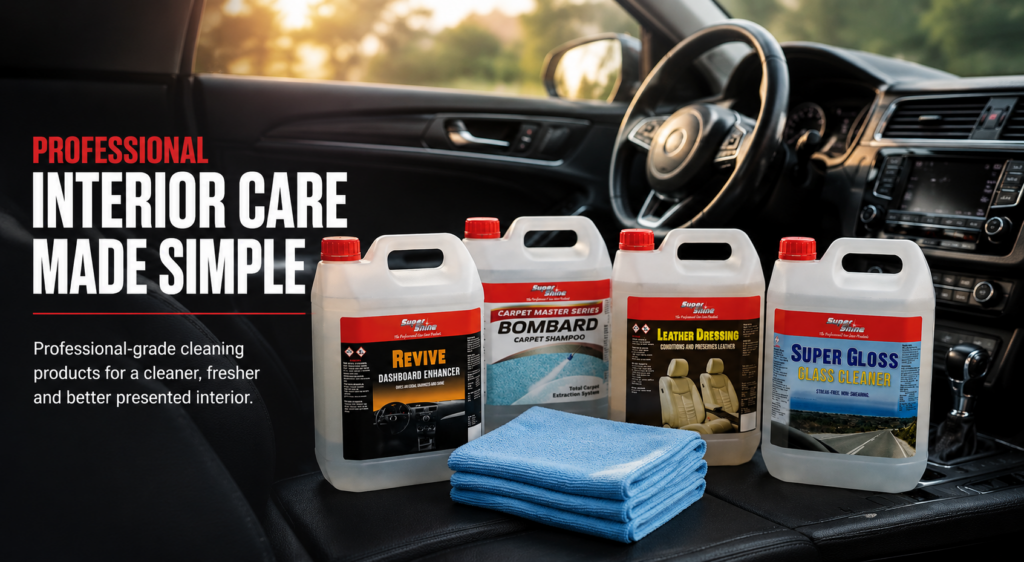
Interior care is where many products look fine at first and disappoint a week later. Dash and vinyl dressings can be too glossy, too greasy, or too heavily scented for commercial use. Carpet cleaners may lift stains but leave sticky residue that attracts fresh soil quickly.
A professional interior cleaner should be versatile, low-residue and easy to wipe off. It needs to clean plastics, vinyl and hard surfaces without smearing or leaving a slick finish. In fleet, dealership and workshop environments, over-dressed interiors are usually a problem, not a selling point.
Fabric and carpet cleaners should rinse or extract cleanly, particularly where repeated maintenance is part of the process. Fast visual improvement is useful, but long-term cleanliness is the better test. A product that leaves fibre crunchy or tacky may look effective on day one and fail after the next round of foot traffic.
Glass cleaners need to work in less-than-perfect conditions
A glass cleaner is often judged in ideal weather on lightly soiled windows. Real use is different. Cold mornings, damp air, smoker residue, road haze and large windscreens expose weak formulations quickly.
The better glass cleaners flash off cleanly, cut through film with minimal passes and do not leave a secondary haze. On trucks and commercial vehicles, where driver visibility matters every day, that reliability is not a minor feature.
Degreasers and engine cleaners: useful, but application is everything
Engine bays, workshop floors and underbody areas need stronger products, but this category demands discipline. The best degreasers cut oil and grime efficiently while remaining manageable in terms of rinse-off and surface compatibility.
A common mistake in degreaser reviews is assuming stronger means better. In practice, overpowered chemistry can stain certain metals, affect plastics or create unnecessary handling concerns. A better benchmark is whether the product removes the target contamination at a sensible dilution, within a practical dwell time, and without creating problems for surrounding surfaces.
For workshops and transport operators, consistency and clear usage guidance matter as much as cleaning power. Reliable technical support, safety data availability and sensible application advice are part of the product value, especially when multiple staff are using the same chemicals.
Polishes, waxes and dressings: appearance still needs durability
Protection products are often sold on shine, but gloss by itself is easy. Lasting performance is harder. A polish should refine the surface without creating unnecessary dusting or wipe-off frustration. A wax or sealant should add protection and water behaviour that lasts beyond the first wash.
Dressings for tyres and trim need to suit the environment. High gloss might suit a show finish, but for trade and fleet use, a controlled satin finish is usually more practical. It looks clean, avoids sling and holds up better in daily use.
There is no single best product here because expectations vary. A detailing studio may prioritise finish quality above speed. A dealership may need presentable, repeatable results on volume. A fleet operator may care less about depth of gloss and more about fast application and a neat, durable appearance.
Why product range matters more than single-product hype
A single good product is useful. A coherent system is better. When wash chemicals, wheel cleaners, interior products and dressings are designed or selected to work together, the result is more predictable. Staff training becomes easier, stockholding is simpler, and finish quality becomes more consistent across different vehicles.
That is particularly important for workshops, transport companies and detailing operations managing mixed vehicle types. A supplier with both in-house manufacturing knowledge and access to proven global brands can usually offer a more practical fit across passenger vehicles, heavy-duty transport and specialist cleaning tasks. SuperShine has built much of its reputation on that kind of trade-focused support.
The verdict in any car care products review
The strongest products are not always the best products. The best ones are the products that suit the surface, match the contamination, fit the workflow and perform consistently over time. That applies whether you are cleaning a single enthusiast vehicle, preparing dealership stock, or maintaining a fleet that cannot afford downtime.
If you are reviewing your current setup, look past marketing language and focus on what happens after repeated use. Check labour time, check finish quality a week later, and check whether staff can use the product correctly without constant correction. That is where genuine value shows up.
The right car care range should make cleaning more predictable, not more complicated. If a product helps your team work faster, finish better and avoid rework, it has earned its place on the shelf.
