
Blogs
Best Glass Cleaners for Fleets That Work
Jul
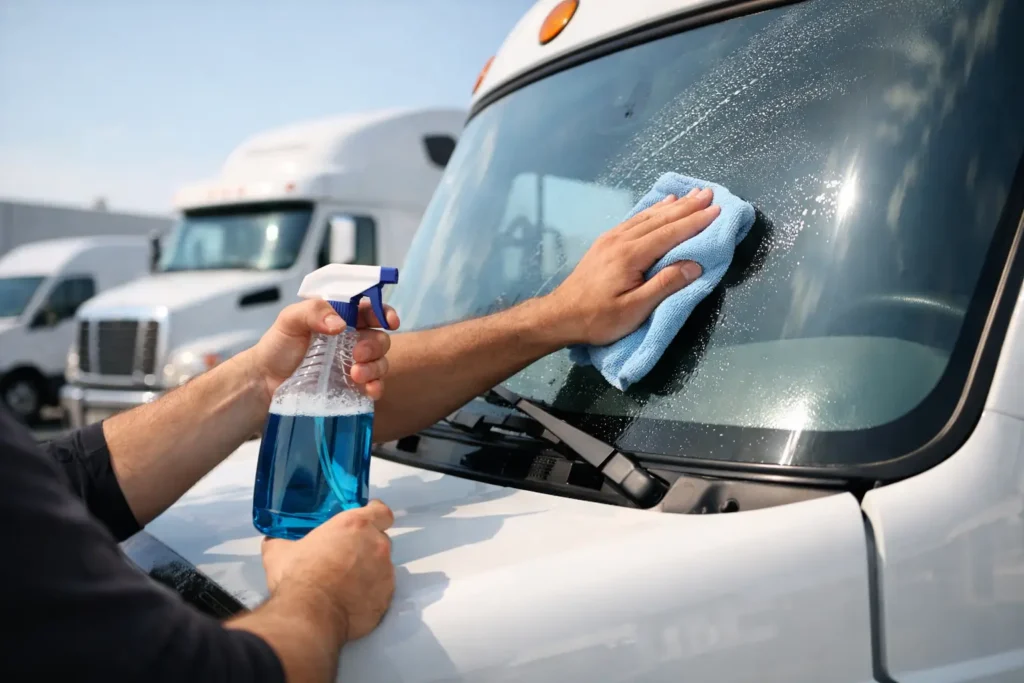
A windscreen can look clean in the depot and still create glare at first light, after rain, or under worksite lighting. That is why the best glass cleaners for fleets are not simply the strongest-smelling products on the shelf. They are the products that remove road film quickly, dry without residue and fit the way your team actually cleans vehicles.
For transport operators, workshops and mobile detail teams, glass care is a visibility and presentation job. A cleaner that leaves streaks, smears greasy fingerprints across the side glass or takes too long to use creates repeat work. Across a fleet, those small inefficiencies add up quickly.
What makes a glass cleaner fleet-ready?
Fleet vehicles collect a different type of contamination from a privately owned car. Highway grime, diesel haze, bug residue, salt spray, workshop dust, interior vinyl off-gassing and smokers’ film can all settle on glass. Truck windscreens and mirrors are particularly exposed, while vans, utes and passenger vehicles often carry fingerprints and interior film from regular driver changes.
A suitable cleaner needs enough cleaning power to cut through that soil without leaving a chemical film behind. Clear glass is the outcome, but the process matters just as much. The product should be easy for staff to apply consistently, work well with quality microfibre glass cloths or paper towels, and perform across large windscreens, mirrors, side windows and interior glass.
The best performers generally balance four practical qualities:
- Fast removal of oily road film, insects, dust and fingerprints.
- Low-residue drying to reduce streaking and night-time glare.
- Safe, straightforward application for regular cleaning routines.
- A format that suits the fleet’s volume, equipment and storage setup.
A glass cleaner that excels at one of these but falls short on the others may still have a place. For example, a high-strength product may be useful for heavily soiled workshop vehicles, while a milder maintenance cleaner can be the better choice for daily cab clean-downs.
Choose the cleaner format before choosing the product
There is no single best format for every operation. The right choice depends on vehicle numbers, cleaning frequency, access to water and how much control you need over chemical use.
Ready-to-use trigger sprays
Ready-to-use glass cleaner is the practical choice for driver areas, detailing bays and crews working through a mixed fleet. There is no dilution step, application is predictable, and staff can clean spot marks as part of a pre-start check or handover routine.
This format is particularly useful for interior windscreens, rear-view mirrors and side glass. It also reduces the chance of a staff member mixing concentrate too strongly, which can cause excess residue or waste. The trade-off is that ready-to-use product can create more packaging and take up more storage space where vehicle numbers are high.
Concentrated glass cleaners
For a wash bay or dedicated cleaning team, concentrates can improve control and reduce handling volumes. Used through correctly labelled spray bottles or dispensing equipment, a concentrated product supports consistent supply across many vehicles.
Accuracy is essential. Too weak, and the cleaner struggles with road film. Too strong, and it may be harder to buff dry or deliver no meaningful gain for the extra chemical used. Set a clear dilution procedure, use measuring equipment, and label every secondary container with the product name and safety information.
Aerosol glass cleaners
Aerosol products can be effective for targeted work, particularly when a technician needs a foaming action that clings to vertical glass. They suit workshop shelves and detail kits, but are usually less efficient for high-volume fleet cleaning. Overspray, ventilation requirements and the need to manage cans appropriately make them better suited to occasional specialist use than an entire depot programme.
The cleaning challenges that separate good products from average ones
Exterior road film and insect residue
A windscreen does not need to look muddy to be dirty. A transparent layer of diesel exhaust, oily traffic film and fine dust can cause wiper chatter and a hazy view when the sun is low. Glass cleaner should lift this film rather than spread it around.
For baked-on insects, bird droppings or heavy grime, do not expect a glass cleaner alone to replace a proper pre-wash. Remove the bulk contamination first using an appropriate wash process, then clean the glass as a finishing step. Trying to scrub abrasive dirt off dry glass is slow and can damage wiper blades or scratch surfaces.
Interior haze and fingerprints
The inside of a windscreen is often missed because it is awkward to reach, yet it has a major effect on glare. Haze can come from dashboard dressings, airborne dust, heater use and normal cabin activity. On shared vehicles, fingerprints and greasy marks around side windows are also common.
Use a clean, dedicated glass cloth and turn it regularly as it becomes soiled. Reusing a cloth that has previously carried tyre dressing, polish or general-purpose cleaner is one of the fastest ways to create smears. For large truck windscreens, a reach tool can improve coverage and reduce the temptation to leave the centre section untouched.
Tinted glass, coatings and cameras
Always consider the vehicle specification. Many modern fleets have tinted windows, aftermarket film, rain sensors, ADAS camera zones and treated glass. A product suitable for plain automotive glass may not be the right option for every film or coating.
Avoid aggressive solvents on tinted film unless the film manufacturer confirms compatibility. Apply product to the cloth rather than directly flooding sensitive edges, camera housings or electronic areas. A careful technique protects the vehicle and keeps the cleaning process consistent for the next operator.
Technique matters as much as chemical choice
Even the best fleet glass cleaner will streak when it is applied with poor tools or in the wrong conditions. Clean glass in the shade where possible, especially during hot weather. Direct sun can flash-dry product before it has time to lift contamination.
Start with a light, even application rather than saturating the glass. Work one section at a time, using one cloth to clean and another dry cloth to finish. A horizontal wipe followed by a vertical finishing wipe helps identify whether any remaining streak is on the inside or outside of the glass.
For exterior windscreens, inspect wiper blades at the same time. A worn, split or contaminated blade can immediately drag marks back across otherwise clean glass. Cleaning blades with a suitable cloth and replacing damaged rubbers is a small maintenance step with a direct visibility benefit.
Build glass cleaning into fleet standards
The strongest result comes from treating glass care as part of vehicle readiness, not a last-minute cosmetic task. Drivers should be able to remove a mark from their windscreen and mirrors before leaving site. Wash crews should include exterior glass in their standard finish. Workshop staff should return a vehicle with clean glass after repairs, especially where hands, dust or protective coverings have contacted the cabin.
This does not require a complicated programme. It requires the right products at the point of use, dedicated clean cloths, clear instructions and regular replenishment. Keeping glass cleaner beside wash-bay supplies, service lanes and dispatch areas makes the correct action easy.
For fleet managers, standardisation is also valuable. Using multiple unknown products across different branches can produce variable results and make safety documentation harder to manage. A professional vehicle-care supplier such as SuperShine can help match glass-cleaning products, accessories and dispensing arrangements to the work being done, from passenger vehicles through to heavy-duty transport.
How to assess the best glass cleaners for fleets
Trial products under real operating conditions rather than judging them by fragrance or first spray. Test them on a windscreen with normal road film, an interior windscreen with haze, a mirror with fingerprints and side glass exposed to dust. Check the finish from inside the cabin and from outside, including under low-angle light.
Ask the people who clean the vehicles whether the product wipes on easily, whether it flashes off too quickly and whether it needs repeated passes. Then inspect the result after the vehicle has been driven. A cleaner that appears perfect in a shaded wash bay but creates glare on the road is not doing its job.
Also assess the whole system. The right cleaner paired with poor cloths will disappoint. Separate glass cloths from general cleaning cloths, wash them without fabric softener, and replace them when they lose absorbency. This is often the simplest improvement a fleet can make.
Clear glass is a daily operational standard, not a detailing extra. Select a cleaner that matches your contamination, vehicle mix and workflow, then give the crew the tools and routine to use it properly. The result is a fleet that presents professionally and gives every driver a clearer view of the road ahead.
