
Blogs
Best Carpet Cleaners for Vehicles in Trade Use
Jul
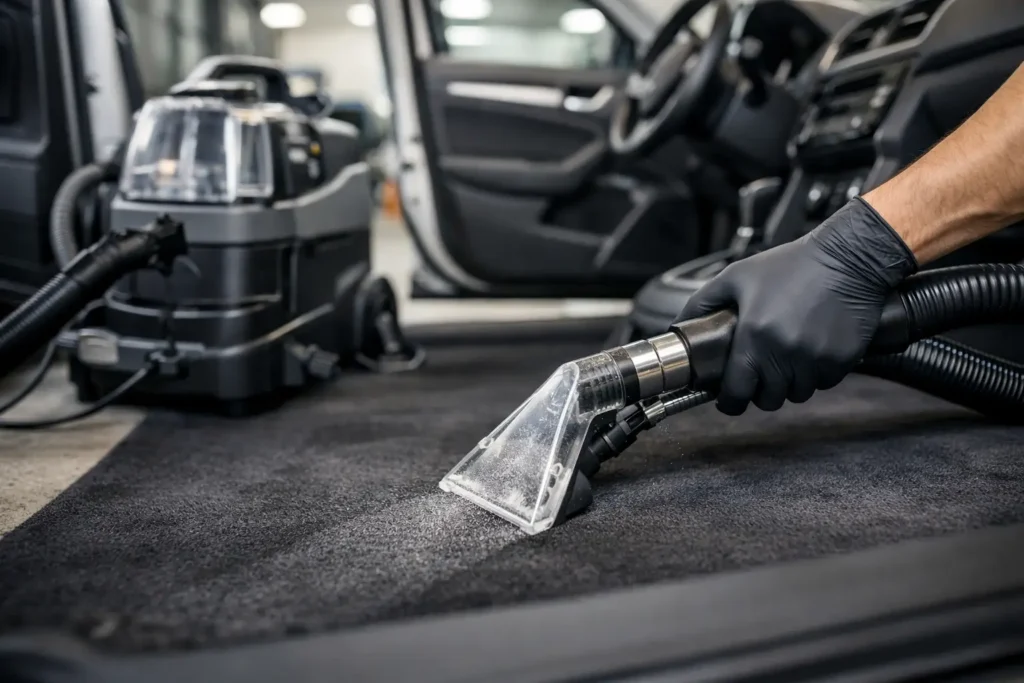
A vehicle interior can look presentable at first glance while its carpets hold months of soil, drink spills, food residue and odours. The best carpet cleaners for vehicles do more than lift visible marks. They release embedded contamination, rinse cleanly through extraction equipment and leave the cabin dry enough to return to service without delay.
For detailers, workshops and fleet operators, choosing a carpet cleaner is less about finding one product for every job and more about matching chemical strength, foam level and dwell time to the vehicle and the soil. A lightly soiled dealership vehicle, a family SUV and a hard-worked truck cab should not be treated as the same cleaning task.
What Makes the Best Carpet Cleaners for Vehicles?
A professional vehicle carpet cleaner needs to work effectively in confined spaces, where over-wetting and lingering fragrance can quickly become customer complaints. It should break down common automotive soils without leaving a sticky residue that attracts dirt again after the vehicle goes back on the road.
The strongest choice is usually a water-based, low-foam cleaner formulated for upholstery and carpet extraction. Low foam matters because foam reduces recovery in an extractor tank, slows the operator down and can leave detergent behind in the carpet backing. That residue may feel stiff underfoot or cause rapid re-soiling.
Look for four practical qualities when assessing a product range:
- Strong cleaning on organic spills, tracked-in dirt and general road grime.
- Controlled foam for use with carpet extractors and wet vacuums.
- Good dilution flexibility, so technicians can adjust strength for maintenance cleans or heavy restoration work.
- A clean rinse profile that does not leave the interior tacky, overly perfumed or difficult to dry.
For businesses working across passenger vehicles and commercial fleets, consistency is equally valuable. Technicians need to know how a product behaves each time, whether they are cleaning a compact hatchback, a ute, a delivery van or a prime mover.
Choose the Cleaner by the Type of Soil
General soil and foot traffic
Most vehicle carpets respond well to a quality low-foam carpet shampoo or extraction detergent. These products are designed to loosen dust, light mud, oily footprints and everyday grime while remaining manageable in a machine. Pre-vacuum first. Removing dry debris before introducing water makes extraction faster and prevents loose grit from turning into sludge.
Agitate high-traffic areas with a carpet brush before extraction, particularly under the pedals, around door openings and across rear footwells. A brush should lift the pile rather than flatten it. Excessive scrubbing can fuzz delicate carpet fibres and make a clean result look untidy.
Food, drink and organic spills
Coffee, milk, soft drink, takeaway residue and pet accidents need more than a general shampoo when they have penetrated the carpet backing. An enzyme-based cleaner is often the right tool because it targets organic matter that can continue to produce odours after the visible stain has been removed.
Give enzyme treatments appropriate dwell time. Rushing directly into extraction may remove surface staining but leave contamination below. The trade-off is that enzyme products are not a substitute for a broad cleaning process. They work best as a targeted pre-treatment, followed by extraction with a suitable carpet cleaner.
Grease, oil and workshop contamination
Vehicle carpets from work utes, service vans and truck cabs can pick up oily residues that ordinary shampoo will struggle to shift. A purpose-made solvent spotter or degreaser may be required, but it must be used carefully. Test it on an inconspicuous area first, use the minimum effective amount and avoid saturating carpet backing or sound-deadening layers.
Do not use a harsh engine degreaser across an interior carpet simply because the stain is oily. Interior materials vary widely, and aggressive products can affect dyes, adhesives and trim. Controlled spot treatment followed by a proper carpet extraction process is the safer and more professional approach.
Odours that return after cleaning
A deodoriser can improve the cabin experience, but fragrance alone does not solve an odour source. If the smell returns as the carpet dries, contamination is likely still in the backing, underlay or nearby upholstery. Identify the source first, treat it with the appropriate cleaner and extract thoroughly.
This is particularly relevant in fleet cabins, where damp workwear, food, wet footwear and long operating hours can create persistent odours. Good airflow during drying is just as important as the chemical selection. Closing a vehicle immediately after a wet clean is an easy way to undo otherwise sound work.
The Right Process Matters as Much as the Product
The best carpet cleaner cannot compensate for poor preparation or an overloaded extractor. A repeatable process gives better results and protects productivity across a busy detailing bay or fleet wash operation.
Start by removing mats, rubbish and loose cargo. Vacuum the carpet thoroughly, including seams, seat tracks and the edges beneath the pedals. If the vehicle has rubber mats, clean them separately so dirt is not transferred back onto the carpet once it is dry.
Apply a diluted pre-spray or carpet cleaner to the affected areas. Avoid soaking the carpet, especially in modern vehicles with electrical connections, sensors and dense sound insulation below the floor covering. Allow the product to dwell according to the label directions, then agitate where soil is heavy.
Extract with clean water or a compatible rinse solution, making slow passes to recover moisture and suspended soil. Two dry recovery passes for every wet pass is a useful operating discipline. It reduces drying time and helps prevent wicking, where a stain rises back to the surface from deeper in the carpet as it dries.
Finish by grooming the pile in one direction where appropriate. This gives a more uniform appearance and makes any remaining marks easier to identify before the vehicle leaves the bay.
Machine Compatibility and Foam Control
For high-volume work, extraction equipment and chemical choice must be treated as one system. A carpet cleaner that performs well by hand may be unsuitable for a heated extractor or wet vacuum if it produces excessive foam. Foam can travel into the recovery system, reduce suction and create unnecessary maintenance work.
Use the specified dilution rate and measure it accurately. Over-concentrating a cleaner rarely produces a better result. More often, it makes rinsing harder, increases chemical use and leaves more residue in the carpet. For operators managing several sites or a large fleet, measured dilution also supports consistent results between staff and shifts.
Water quality can affect performance as well. Hard water may reduce cleaning efficiency or leave mineral residue, while very cold water can limit soil removal. Where equipment allows, warm water extraction can improve results on greasy, heavily used carpets, provided the vehicle materials and chemical directions support it.
When to Use a Specialist Cleaner Instead
A general carpet shampoo handles the majority of routine work, but specialist products earn their place in a professional cleaning programme. Use an enzyme treatment for organic contamination, an approved spotter for ink or grease, and a deodorising treatment when the source of an odour has been properly addressed.
For flood-affected interiors or severe biological contamination, the job may require carpet removal, underlay replacement and more extensive sanitisation. Trying to solve that level of contamination with a surface cleaner can create a false finish and leave the vehicle unsuitable for return to service.
Leather, suede-like trim and fabric headliners also need separate care. Keep carpet chemicals away from these surfaces unless the product is explicitly approved for them. Spraying broadly inside the cabin may feel efficient, but targeted application reduces risk and uses less product.
Build a Reliable Interior Cleaning System
A dependable interior result comes from having the right shampoo, spot treatment, deodoriser, brushes, microfibre cloths and extraction equipment ready for the job. That is more efficient than asking one product to handle every stain in every vehicle.
SuperShine supports professional operators with vehicle-care solutions designed for practical, repeatable cleaning work. For workshops and fleet teams, product choice should also account for staff training, safety data requirements and the need to replenish stock without interrupting operations.
The cleanest carpet is not always the one that has received the most chemical. It is the one that has been correctly assessed, treated with the right product, thoroughly extracted and given enough airflow to dry properly before the next driver opens the door.
