
News
Choosing Professional Car Cleaning Products
May
A streaky windscreen, whitening on plastics, or a wheel cleaner that bites too hard into the wrong finish – most cleaning problems start long before the job begins. They start with product choice. Professional car cleaning products are not just stronger versions of retail cleaners. They are built for repeat use, predictable results and the kind of operating conditions that workshops, transport operators and detailers deal with every day.
For trade buyers, the question is rarely whether a product works once. The real test is whether it works across different vehicle types, different soils and different staff members without creating rework, damage or wasted time. That is where professional-grade chemistry earns its place.
What sets professional car cleaning products apart
The biggest difference is consistency. Consumer products are usually packaged for occasional use and broad appeal. Professional car cleaning products are formulated for volume, speed and repeatability. That means better dilution control, clearer application methods and more dependable performance when you are washing ten vehicles, not one.
There is also a practical difference in range. A professional setup does not rely on one multipurpose bottle to do everything. It separates tasks properly – pre-wash, shampoo, wheel cleaning, degreasing, glass cleaning, interior cleaning, dressing and finishing. That matters because road film on a fleet truck is not the same as brake dust on an alloy wheel, and neither should be treated with the same chemistry.
Another point often missed is material safety. Stronger is not always better. The right professional product is designed to clean effectively while staying compatible with paint systems, trim, rubber, metals and interior surfaces. In a trade environment, avoiding damage is just as valuable as cutting through grime.
Start with the job, not the label
A lot of buyers make the mistake of shopping by product name alone. The better approach is to start with the cleaning task and the environment.
If you run a workshop, you may need fast-turnaround products that remove grease, oil and workshop grime without leaving slippery residue behind. If you manage a transport fleet, your focus may be large-volume washing, road film removal and maintaining presentation standards across trucks and trailers. If you are detailing passenger vehicles, finish quality, surface compatibility and final appearance will often sit higher on the list.
That is why the best product range is not always the biggest one. It is the range that covers your real jobs without overlap and confusion. A tighter system with the right wash, wheel cleaner, interior cleaner, glass cleaner, degreaser and dressing will usually outperform a shelf full of products that do similar things badly.
The core categories that do the heavy lifting
Washes and pre-washes
A proper wash process starts with loosening traffic film and grime before contact washing. In commercial use, this saves labour and reduces the chance of rubbing grit into paintwork. For heavier vehicles, the product needs enough cleaning power to deal with diesel soot, road spray and built-up residue while still rinsing freely.
This is where dilution rates matter. A wash that looks cheaper per drum can become expensive if it has to be used too heavily to perform. Buyers should look at cost per use, not just purchase price.
Wheel cleaners and degreasers
Wheels and lower panels carry some of the toughest contamination on any vehicle. Brake dust, road tar, grease and iron fallout need targeted treatment. But wheel chemistry is one area where product selection needs care. Acid-based options can be effective in the right hands, though they are not suitable for every wheel type or every operator. Safer alternatives may take a little longer but can reduce risk across mixed fleets.
Degreasers are similar. Engine bays, chassis areas and workshop floors all require cleaning power, but the right product depends on the soil load and the substrate. An aggressive solvent may be justified for certain heavy deposits. For regular maintenance cleaning, a water-based degreaser may be the smarter and safer choice.
Interior and glass cleaners
Interior care often gets treated as an afterthought, yet it is one of the quickest ways to improve perceived vehicle condition. Trade users need products that clean vinyl, plastics, carpet and upholstery without sticky residue or overpowering fragrance. A dashboard that looks glossy for ten minutes but attracts dust by the afternoon is not a professional result.
Glass cleaners also need to be judged by finish, not scent or foam. Fast flash-off, low residue and clean visibility are what matter. On commercial vehicles in particular, clear glass is not just cosmetic. It supports safe operation.
Dressings, polishes and waxes
Finishing products should support the type of work you do. A dealership or detailing business may want higher visual impact and paint enhancement. A fleet operator may simply need durable dressings that improve presentation without creating sling, greasy build-up or extra maintenance.
There is always a trade-off between speed, finish and longevity. Sprayable products can save time. More durable protection often takes more labour. The right choice depends on whether the vehicle is being prepared for resale, maintained for brand image or cleaned as part of routine operations.
Why local conditions matter
Not every product performs the same way in every market. Water quality, climate, road grime and seasonal conditions all affect cleaning outcomes. Dusty rural work, coastal salt exposure, urban traffic film and heavy freight routes each create different cleaning challenges.
This is why local product knowledge matters as much as the label on the drum. A supplier that understands local operating conditions can help buyers avoid common mismatches – products that foam too much in one system, dry too quickly in hot weather, or struggle with the kind of grime common to transport and workshop environments.
For many trade customers, support is part of the product. Advice on dilution, application and category selection can save more money than chasing a slightly lower unit price.
Buying for performance, not shelf appeal
When businesses assess professional car cleaning products, they should look beyond packaging and headline claims. Performance in a trade setting comes down to a few practical measures.
First is labour efficiency. Does the product shorten wash time, reduce scrubbing or cut down on rework? Second is consistency. Can different staff members use it and get the same result? Third is compatibility. Does it work safely across the vehicles and surfaces you handle most? And fourth is supply reliability. If a product works well but is hard to source consistently, it becomes an operational problem.
This is where established suppliers tend to outperform opportunistic sellers. The value is not only in having a broad catalogue. It is in having stock continuity, technical backup, safety documentation and people who understand what each product is supposed to do in a real workplace.
Professional car cleaning products in fleet and workshop settings
Fleet washing is a different discipline from enthusiast detailing. The aim is not perfection at any cost. It is efficient, repeatable cleanliness that protects presentation, supports maintenance standards and keeps vehicles serviceable.
That changes what good buying looks like. In a fleet environment, concentrated products, simple systems and dependable bulk supply usually matter more than boutique finishes. In workshops, versatility and degreasing strength may take priority. In detailing, finish quality and surface-specific products become more important.
The smartest buyers match product systems to workflow. They do not overcomplicate fast wash bays with specialist products that slow down throughput. At the same time, they do not force a single harsh cleaner across paint, trim, glass and interior surfaces just to save shelf space. That usually costs more in the long run.
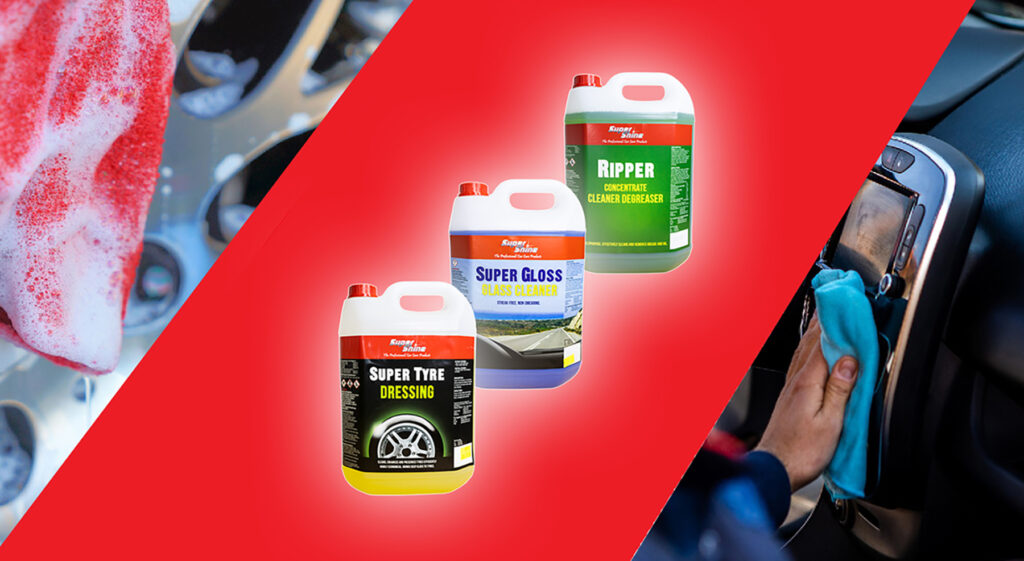
SuperShine has built its range around exactly this kind of practical use – products and support that fit real workshop floors, wash bays and fleet yards rather than ideal conditions on a brochure.
Common mistakes that cost time and money
One of the most common issues is overusing product. More chemical does not always mean better cleaning. In many cases it means streaking, residue, difficult rinsing and unnecessary spend. Proper dilution and application method make a measurable difference.
Another mistake is relying too heavily on one all-purpose cleaner. Multipurpose products have a place, especially in high-volume operations, but they cannot replace specialised chemistry in every category. Trying to make one product handle wheels, paint, interiors and engines is usually where performance falls away.
The last major issue is treating accessories as secondary. Brushes, spray bottles, triggers, wash tools and application equipment all affect outcomes. Even a strong chemical system can underperform if it is being applied poorly or inconsistently.
How to build a cleaner, simpler product system
If your current setup feels bloated or inconsistent, start by trimming it back to the jobs you perform most often. Map your weekly cleaning tasks, identify the soils involved and choose products by category rather than brand hype. Then check dilution rates, staff handling requirements and whether the products fit your equipment.
A good system is easy to train, easy to restock and hard to misuse. It gives operators clear purpose for each product and produces reliable results without guesswork. That is what separates a professional cleaning setup from a collection of random bottles.
The right products do more than make vehicles look better. They help protect assets, reduce labour drag and keep standards consistent across every wash, every handover and every vehicle that leaves the yard. If you are buying for business, that is the standard worth aiming for.
