
Blogs
Commercial Vehicle Cleaning Chemicals Guide
Jul
A truck that looks clean but still carries road film on the curtains, grease around the chassis and residue on the glass is not really clean – it is just halfway there. That is where a proper commercial vehicle cleaning chemicals guide earns its keep. For fleet managers, workshop teams and professional detailers, the right chemistry saves labour, protects surfaces and keeps presentation standards consistent across every vehicle.
Commercial vehicles work harder than passenger cars, and the contamination is different. You are dealing with diesel soot, traffic film, brake dust, road grime, grease, mud, mineral deposits and interior wear from long hours on the road. One product will not do every job well. The better approach is to match the chemical to the soil type, the vehicle surface and the washing method you use on site.
What a commercial vehicle cleaning chemicals guide should help you decide
A useful guide is not just a product list. It should help you choose chemicals based on the job in front of you, how often the vehicle is cleaned and how much risk there is to painted surfaces, polished metal, plastics, rubber and decals.
The first question is always what you are trying to remove. Organic grime such as food spills, mould or body oils behaves differently from petroleum-based grease and road tar. Mineral build-up from hard water or cement dust needs a different treatment again. If the soil is misread, operators often compensate by scrubbing harder or using a stronger product than necessary. That can waste time and create avoidable surface damage.
The second question is how the chemical will be applied. A fleet wash bay with foaming equipment and trained staff can use a different process from a mobile operator cleaning utes and light commercials on customer sites. Dwell time, dilution ratio and rinse quality all affect performance. Good results come from chemistry and method working together.
Start with the wash stage
For most commercial vehicles, the wash stage does the heavy lifting. A quality truck wash or general exterior wash should break down road film effectively without stripping protection or dulling painted finishes. This matters on signwritten fleets, where harsh chemistry can shorten the life of decals and leave panels looking tired well before their time.
Traffic film removers are often useful on heavy transport, especially where vehicles run long distances in mixed weather. They are designed to loosen the grey-brown layer that standard shampoos can leave behind. Even then, stronger is not always better. If you are washing regularly, a milder but consistent maintenance product may be the better choice. If you are bringing neglected assets back up to standard, you may need a stronger first-pass chemical followed by a safer maintenance wash moving forward.
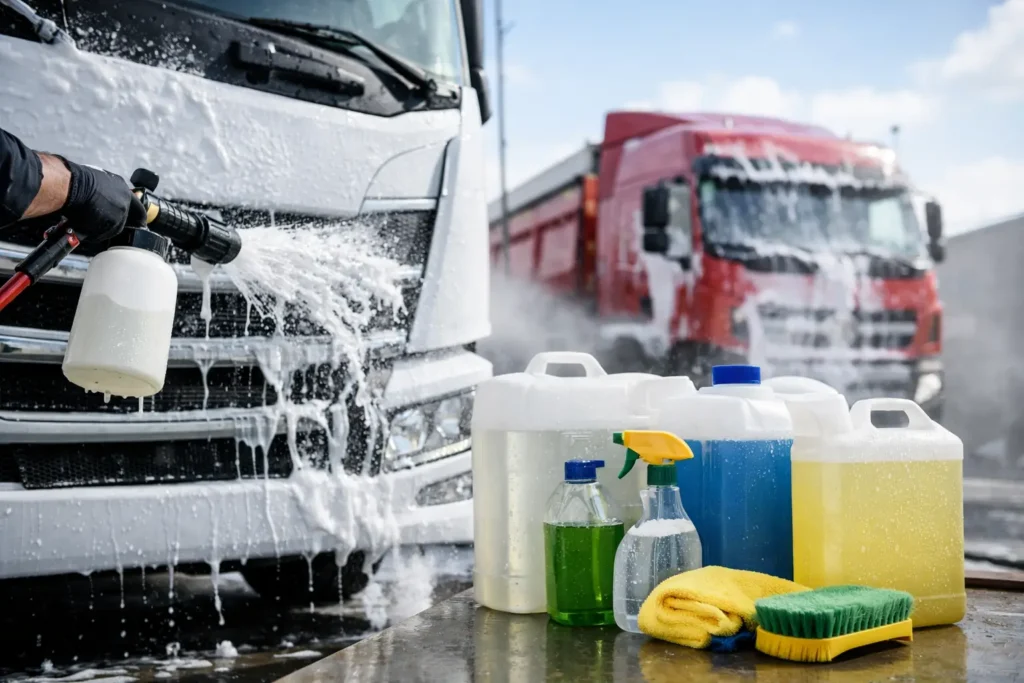
Foaming products can improve coverage and visibility during washing, particularly on larger units. They help operators see where the product has been applied and can extend dwell time on vertical surfaces. That said, foam alone is not proof of cleaning strength. In fleet environments, performance, rinse behaviour and cost-in-use matter more than dramatic suds.
Pre-wash and bug removal
Fronts of trucks, mirrors and lower panels often need pre-treatment. Bug residue, diesel staining and built-up grime around steps and bumper sections can bond tightly if left too long. A dedicated pre-wash or bug remover can reduce agitation and lower the chance of scratching during contact washing.
This is also where operator discipline matters. Pre-sprays need the right dwell time, but they should not be allowed to dry on the surface. On warm days or in direct sun, that window gets shorter.
Degreasers, solvents and engine bay cleaners
Commercial vehicles collect grease in places that standard wash products simply will not touch. Chassis rails, fifth wheels, workshop floors, engine bays and underbody components usually need a proper degreaser or, in some cases, a solvent-based cleaner.
Water-based degreasers are a practical first choice for many transport and workshop jobs. They are effective on general grease, oily residue and built-up grime, and they are usually easier to rinse. They also suit teams that want one dependable product for engines, machinery and hard surfaces, provided the dilution is adjusted to match the task.
Solvent cleaners come into their own when the contamination is heavier or more stubborn, such as tar, adhesive residue or thick petroleum deposits. The trade-off is that stronger solvents can affect sensitive plastics, rubber trims and some painted surfaces if misused. They need experienced handling and clear process control.
Engine cleaning is another area where restraint pays off. A dedicated engine cleaner should cut oil and grime without leaving heavy residue behind. Modern engine bays include sensors, coatings and mixed materials, so the aim is controlled cleaning, not flooding the compartment with the harshest product available.
Wheels, brakes and brightwork need their own chemistry
Wheel contamination on commercial vehicles is a blend of brake dust, road grime and metal fallout. On polished alloy or specialised finishes, using the wrong wheel cleaner can create staining or dullness quickly. A safer pH-balanced cleaner may need a little more agitation, but it reduces risk on premium finishes. Stronger acidic products can work faster on severe build-up, though they demand careful use and should be reserved for suitable surfaces and trained operators.
Brake cleaner sits in a separate category. It is not a wheel wash. Its job is to remove brake dust, oil and residues from brake and mechanical components where a fast-drying, low-residue result is required. That makes it valuable in workshop settings, but it should be treated as a specialised product rather than a shortcut for general cleaning.
Metal brighteners and aluminium cleaners can also be useful on tanks, rims and polished components, but only when the surface and finish are well understood. These products can deliver excellent visual results, yet misuse is expensive. Testing in a small area first is standard practice for a reason.
Interior and glass products for high-use cabins
A clean cab is not just about appearance. It affects driver comfort, odour control and the standard your business presents to staff and customers. Commercial interiors take a beating from dust, food, mud, wet gear and constant entry and exit. The best results usually come from using dedicated products rather than relying on a single all-purpose cleaner for everything.
For hard interior surfaces, a mild interior cleaner that lifts grime without leaving greasy shine is the right starting point. Overly glossy dressings can make cabins look artificial and may create slip issues on some surfaces. On dashboards, door cards and vinyl trims, a controlled satin finish is often the more professional result.
Carpet and upholstery cleaners need to remove soil efficiently without over-wetting. In work vehicles, that matters because downtime is limited and damp interiors quickly become a source of odour. Deodorisers have their place, but they should finish the job, not mask poor cleaning underneath.
Glass cleaners should cut smoker’s film, road dust and interior haze without smearing. On commercial units with large windscreens, side glass and mirrors, visibility is a safety issue as much as a presentation issue. Ammonia-free options are often the safer choice around tinted surfaces and interior materials.
How to choose the right commercial vehicle cleaning chemicals
A commercial vehicle cleaning chemicals guide only works if it helps with day-to-day buying decisions. In practice, that means narrowing products by soil type, vehicle mix, staff capability and throughput.
If your fleet is washed often, prioritise products that are consistent, surface-safe and easy to dilute correctly. If you manage mixed assets – trucks, vans, utes, forklifts and workshop areas – there is value in a streamlined range that covers most tasks without creating confusion on the floor. If your team includes multiple operators, labelling, safety data sheets and clear usage guidance are just as important as cleaning strength.
Local conditions also matter. Vehicles operating across New Zealand pick up different grime depending on route, weather and industry. Linehaul units, construction vehicles and urban service fleets do not foul up in the same way. A product range that performs reliably in real transport conditions is worth more than one that only looks good in a catalogue. That is part of why trade buyers tend to value supplier support as much as the chemical itself.
Common mistakes that cost time and finish quality
The most common mistake is using one aggressive product for every surface. It may appear efficient, but it often leads to rework, premature wear or inconsistent presentation across the fleet. Another is poor dilution control. Overdosing does not always improve cleaning, and it can leave residue, increase rinsing time and drive unnecessary chemical consumption.
Skipping dwell time is another frequent issue. Staff under pressure often spray and rinse too quickly, then blame the product. On the other hand, letting chemicals dry on the surface creates its own problems. Good training sits right in the middle – apply properly, allow enough working time and rinse thoroughly.
Finally, accessories matter. Brushes, wash mitts, spray equipment and dilution systems all influence the result. The strongest chemical in the shed cannot compensate for worn tools or poor application.
The right chemical range makes commercial cleaning simpler, not more complicated. When each product has a clear role and the team knows how to use it, vehicles stay cleaner, surfaces last longer and wash routines become easier to manage. If you are reviewing your current setup, start with the soils you see every week and build from there. That is usually where better results begin.
