
Blogs
Degreaser vs Brake Cleaner: What to Use
Jul
A workshop loses time fast when the wrong chemical goes on the job. Use a degreaser where a brake cleaner is needed, and you can be left with residue, extra wiping, or a part that still is not ready for reassembly. Get the degreaser vs brake cleaner decision right, and the job moves quicker, cleaner and with fewer comebacks.
For trade users, the difference is not academic. These products are built for different tasks, different soils and different working conditions. They may both help remove grease and grime, but they do not behave the same way on metal surfaces, brake assemblies, engine bays or workshop parts.
Degreaser vs brake cleaner: the core difference
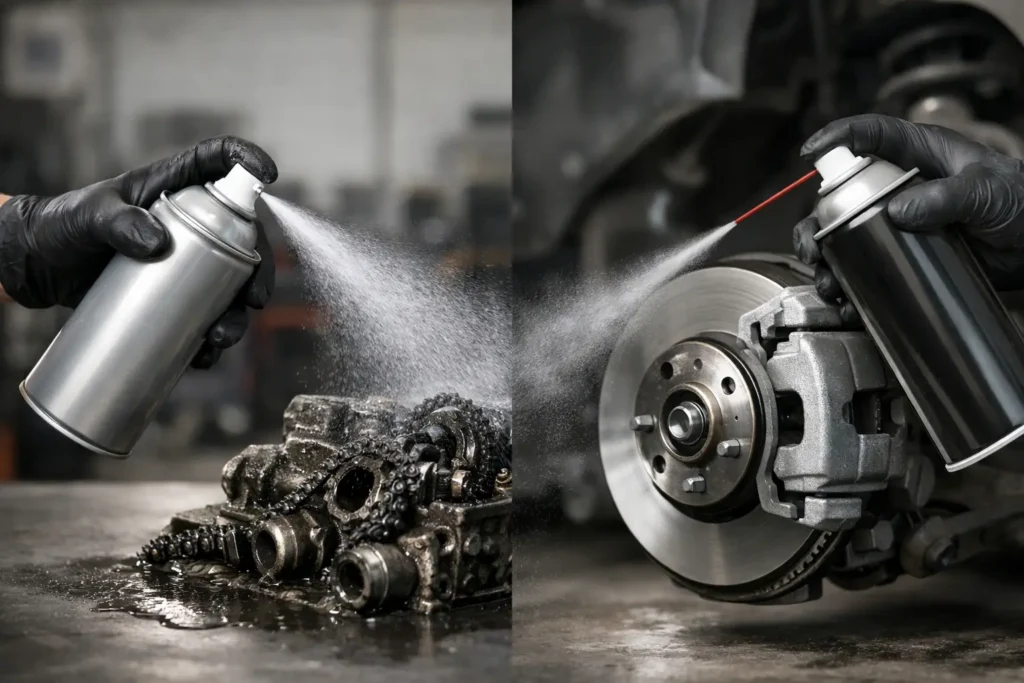
The simplest way to separate them is this: a degreaser is designed to break down oil, grease and general contamination across a wider range of surfaces, while a brake cleaner is designed to flush away brake dust, grease, brake fluid and residues from braking components, then evaporate quickly with little to no residue.
That quick evaporation is a major point of difference. Brake cleaner is generally chosen when a component needs to be clean and dry almost immediately. In a workshop, that matters on brake hardware, metal parts and other areas where residue can interfere with performance or assembly.
A degreaser is usually more versatile, but also more dependent on dwell time, agitation and rinsing or wiping. It is often the better fit for heavier grime, caked-on oil and larger dirty areas where cleaning power matters more than instant evaporation.
What a degreaser is made to do
A degreaser is a workhorse product. In automotive and transport environments, it is commonly used on engine bays, workshop floors, tools, suspension components, wheel arches and greasy external surfaces. Its job is to attack oily build-up and loosen contamination so it can be rinsed, wiped or pressure washed away.
Not all degreasers are the same. Some are water-based and built for broad cleaning and safer day-to-day use on coated or painted surfaces. Others are solvent-based and cut through stubborn grease more aggressively. The right choice depends on the amount of contamination, the surface material and how the cleaned area will be finished.
For a fleet operator or detailing team, degreaser makes sense when the contamination is thick, spread over a broad area, or mixed with road film and dirt. On trucks and commercial vehicles, that often means underbody areas, chassis sections and engine surrounds where grime builds up over long operating hours.
The trade-off is that degreasers are not usually the best choice where absolute dryness and zero residue are essential straight after application. Some require rinsing. Some need wiping. Some can leave a film if overapplied or not fully removed.
What brake cleaner is made to do
Brake cleaner is more specialised. It is intended for brake components and other bare metal parts where you want strong cleaning action combined with rapid evaporation. It is commonly used on discs, drums, calipers, springs, clips and related hardware during servicing and repair.
Its strength is speed and finish. A good brake cleaner lifts contamination and flashes off quickly, which helps remove brake dust, grease, fluid traces and light oil without leaving the part wet for long. That is exactly why technicians rely on it when preparing components for inspection or reassembly.
It also helps where compressed air or wiping alone would just spread contamination around. Instead of moving brake dust and grime from one edge of the assembly to another, brake cleaner can wash it away from the working surface.
That does not make it a catch-all cleaner. Brake cleaner is not the economical or practical choice for large greasy areas, and it is not always suitable for every plastic, rubber or painted surface. Used in the wrong place, it can be harsher than needed.
Where people get it wrong
The most common mistake is treating these products as interchangeable. They overlap in one sense – both can remove oily contamination – but the job outcome is different.
If you spray degreaser onto brake parts and leave it at that, the area may still need rinsing or thorough wiping before the component is genuinely clean and dry. Any leftover residue can work against the standard you want in a braking system.
On the other hand, if you use brake cleaner to attack built-up grease across an engine bay or a dirty truck chassis, you are using a specialist product for a broad, heavy-cleaning task. It may work in spots, but it is not the most efficient way to tackle that level of grime.
Another mistake is ignoring material compatibility. Brake cleaner can be too aggressive for some finishes and non-metal surfaces. Degreasers vary widely as well, and stronger formulas may not suit every painted or sensitive area. In trade environments, reading the label and SDS is not a box-ticking exercise. It is part of choosing the right chemistry for the risk level of the job.
When degreaser is the better choice
If the contamination is heavy, old or spread across a larger surface, start with a degreaser. That includes oil leaks around engines, greasy suspension parts, workshop equipment, dirty diff housings and general under-bonnet cleaning where grime has built up over time.
Degreaser is also the better option when you need dwell time to soften contamination before pressure washing or hand agitation. For vehicle presentation and maintenance work, this matters because road film and grease often cling to textured surfaces, corners and seams. A product that sits and works for a moment is often more effective than a fast-flashing solvent.
In a commercial setting, degreaser also tends to fit the workflow better for wash bays and prep areas. You can apply, allow it to work, then rinse or wipe down methodically. That is a practical process when dealing with utes, vans, trucks and mixed fleet vehicles rather than a single small component on the bench.
When brake cleaner is the better choice
Brake cleaner is the right tool when the part needs to be clean, dry and ready without delay. Brake servicing is the obvious example, but it also suits other metal parts where residue is unacceptable and a rinse step is not practical.
If you are inspecting a rotor, cleaning a caliper bracket, removing contamination from brake hardware or preparing a part before refitting, brake cleaner makes sense. It is designed for precision work rather than broad cleaning coverage.
It can also help in maintenance situations where oil or grease has found its way onto a braking component and needs to be removed quickly. In that case, the fast evaporation is not just convenient. It supports a cleaner finish on a safety-critical area.
Choosing for workshops, fleets and detail operations
For most professional buyers, the answer is not degreaser or brake cleaner. It is degreaser and brake cleaner, each stocked for the jobs it does best.
A workshop handling servicing and mechanical repairs will usually need both on hand because the tasks are different. Brake cleaner belongs near the brake bench and service bay. Degreaser belongs in the wash area, engine-cleaning process and general maintenance workflow.
Fleet teams should think about volume and use case. If your operation is regularly cleaning engine compartments, chassis grime and workshop equipment, degreaser will carry more of the workload. If your technicians are also handling routine brake servicing in-house, brake cleaner remains essential for that specific stage of work.
Detailers and reconditioning teams will generally lean more on degreasers for engine bays, hinges and heavily soiled areas, while being careful with where stronger solvents are used. The point is not to force one product into every task. It is to match the chemical to the finish you need.
The practical rule of thumb
If the job is broad, greasy and likely to need rinsing or agitation, use a degreaser. If the job is focused, metal-based and needs a quick, residue-light finish, use brake cleaner.
That rule will not cover every edge case, but it gets most trade users to the right starting point. From there, surface sensitivity, contamination level and workflow should shape the final choice.
At SuperShine, that is how professional product selection should work – less guesswork, more fit-for-purpose performance. The right chemical does more than clean a part. It protects time in the workshop, supports consistent standards and helps the next stage of the job go smoothly.
When you are choosing between these two, think less about what they are called and more about what the surface needs after cleaning. That is usually where the right answer becomes obvious.
