
Blogs
Waterless Wash vs Shampoo: Which Suits Your Fleet?
Jul
A vehicle can look dusty after a day on the road, but dust is not the same as abrasive grime. That distinction is the starting point in the waterless wash vs shampoo decision. Use the wrong process on a heavily soiled ute, service van or truck, and the result can be poor finish quality, unnecessary labour and fine scratching across the paintwork.
For professional operators, the better option is rarely about preference alone. It comes down to contamination level, available facilities, vehicle size, turnaround expectations and the standard of finish required. Waterless products and wash shampoos both have a place in a well-run vehicle-care programme. The key is applying each where it performs best.
Waterless Wash vs Shampoo: The Core Difference
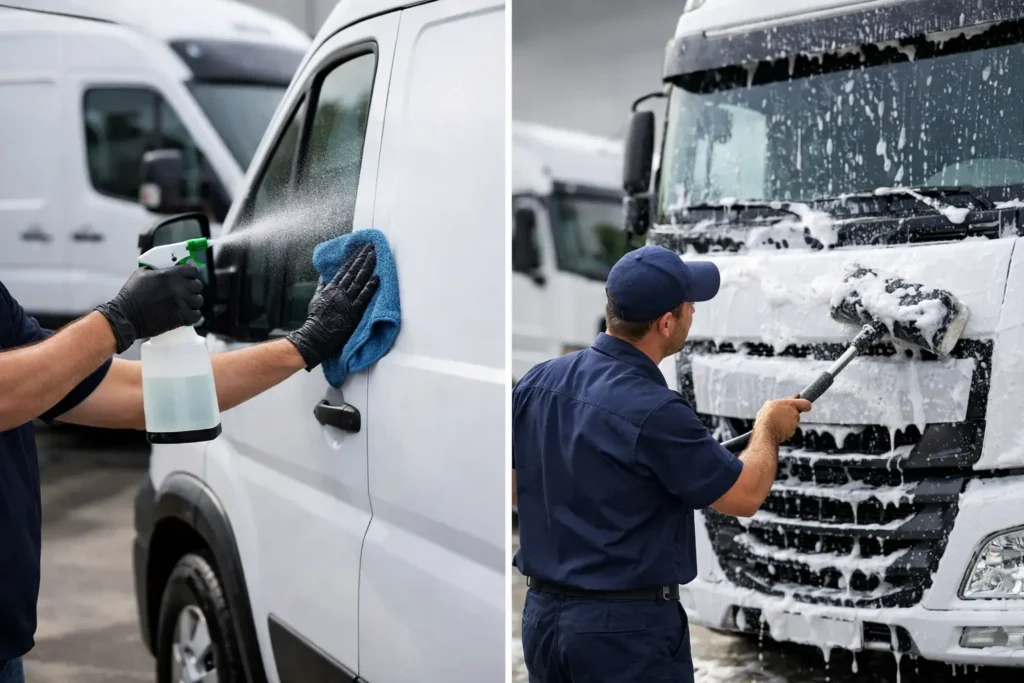
A waterless wash is designed to clean light surface contamination without a hose, bucket rinse or wash bay. The product is sprayed onto a panel, allowed brief contact time where required, then lifted away using clean, high-quality microfibre towels. Its lubricating agents help encapsulate loose dirt so it can be wiped from the surface with reduced friction.
A shampoo wash uses water as the main carrying and rinsing medium. After an initial rinse removes loose grit, a diluted vehicle shampoo is applied with a wash mitt, brush or suitable equipment. The vehicle is then thoroughly rinsed and dried. This method is built for a more complete removal of road film, mud, salt, diesel residue, soot and other bonded contamination.
Neither approach is automatically safer or faster in every situation. A waterless wash can save considerable time on a lightly dusty sales vehicle. A shampoo wash is the professional choice for a mud-spattered work ute or a trailer that has spent the week on wet roads.
When a Waterless Wash Makes Sense
Waterless washing is most useful when the vehicle is lightly soiled and the objective is presentation maintenance rather than heavy cleaning. Think showroom cars, dealership handovers, vehicles stored indoors, executive cars parked under cover, or fleet vehicles that have collected light dust and fingerprints between scheduled washes.
It is also practical where water access is restricted or where setting up a conventional wash is not justified. A mobile detailer can freshen a clean vehicle at a customer site. A workshop can remove light dust from a vehicle before collection. A fleet coordinator can keep the cab of a truck presentable between proper wash-bay cleans.
The labour saving is real, but only when the operator follows a disciplined towel process. Use multiple clean microfibre towels, work one panel or section at a time, and turn to a fresh side before the towel becomes loaded. Wiping a full vehicle with one dirty cloth defeats the purpose of a lubricated waterless product.
Waterless washing is not a shortcut for neglect. It will not safely replace a pre-rinse where grit is visible around lower doors, wheel arches, bumpers, running boards or behind mud flaps. On commercial vehicles, these areas are often where the highest-risk contamination sits.
Waterless Wash Strengths and Limits
The strengths are convenience, reduced water use, fast presentation work and minimal site setup. It can be particularly effective for high-turnover vehicle presentation when surfaces are already in reasonable condition.
Its limitation is soil load. Fine dust may lift safely with the correct chemistry and towel technique, while sand, dried mud and heavy road film need to be flushed away rather than dragged across paint. Dark colours and gloss black trims are especially unforgiving, making correct product selection and clean towels essential.
When Shampoo Is the Better Method
Vehicle shampoo is the workhorse for routine exterior cleaning. It is the stronger choice when vehicles have visible dirt, accumulated road grime, mud, salt spray, bird droppings, insect residue or oily deposits. For fleets operating in construction, rural, freight, civil works or coastal environments, shampoo washing should form the base cleaning process.
The pre-rinse is one of its biggest advantages. Removing loose debris before contact washing greatly reduces the chance of scratching. It also allows the shampoo to work on the contamination that remains rather than attempting to clean everything in one pass.
For trucks and large commercial vehicles, a shampoo system provides more control over the full job. It can be used alongside traffic film removers, degreasers, wheel cleaners and brushes where appropriate, with each product targeted to the surface and soil type. This matters because a standard body wash alone may not shift grease around fuel areas, brake dust on wheels or ingrained grime on chassis components.
A quality shampoo should offer good lubrication and cleaning performance without being unnecessarily harsh on painted surfaces, trim or existing protection. Correct dilution matters. More concentrate is not always better, and over-strength solutions can create residue, waste product and complicate rinsing.
Shampoo Wash Strengths and Limits
Shampoo gives a more thorough clean, handles heavier contamination and suits scheduled fleet maintenance. It is generally the lower-risk process for dirty vehicles because water carries away abrasive material before the wash mitt touches the paint.
The trade-off is setup, water use and drying time. Operators need a suitable wash area, compliant wastewater management and enough time to rinse properly. A rushed shampoo wash can leave spotting, detergent residue and untouched grime in seams, mirrors and around badges.
Assess the Vehicle Before Choosing a Method
The best operators do not decide from the job card alone. They inspect the vehicle first. Run a clean finger lightly over a horizontal panel only if needed to assess whether the surface carries loose dust or a gritty film. Look closely at lower panels, the front bumper, rear tailgate, wheel arches and mirrors. These areas usually tell the true story.
A waterless wash is suitable when the paintwork has light dust, fingerprints or fresh water spotting, and there is no visible grit. Shampoo is appropriate when contamination can be seen or felt, especially after rain, gravel roads, roadworks, long-distance travel or parking under trees.
If there is any doubt, use a rinse-based process. The time saved by choosing waterless washing disappears quickly if the vehicle requires polishing to correct avoidable marring.
Process Control Matters More Than the Product Name
Good results depend on method. For waterless washing, work out of direct sun where possible, avoid hot panels, use clean folded microfibres and change towels frequently. Spray enough product to provide lubrication, but do not flood trims, sensors or panel gaps without wiping them dry. Finish with a separate towel to level any remaining residue.
For shampoo washing, start from the cleanest areas and move towards the dirtiest. Rinse the vehicle thoroughly first, wash from the roof down, and use separate tools for paintwork, wheels and lower body sections. A wheel brush that has contacted brake dust and road grit should never return to painted panels.
Drying is not an optional final touch. Standing water can leave mineral spotting, particularly on dark paint and glass. Use clean drying towels or suitable air equipment, then inspect door shuts, mirror housings, grille sections and the boot or tailgate area for trapped water.
Building the Right Fleet Cleaning Routine
For many fleets, the most effective answer is not waterless wash or shampoo. It is a planned combination. Use shampoo washes as the scheduled foundation, based on operating conditions and vehicle use. Keep waterless wash products available for light presentation work between those deeper cleans.
A courier fleet operating mainly in urban areas may benefit from frequent waterless touch-ups and regular shampoo washes. A rural service fleet may need shampoo washing far more often due to dust, mud and road film. Heavy transport vehicles may require a dedicated wash process that addresses cab paintwork, wheels, fuel areas, trailers and safety-critical visibility points separately.
Keep cleaning chemicals, towels and tools matched to the task. Professional-grade products perform best when staff understand dilution, dwell time, surface suitability and safe handling. Clear site procedures also make it easier to achieve consistent results across shifts and locations.
For businesses managing a mixed fleet, SuperShine can help align vehicle-care products and accessories with the way your vehicles actually operate, rather than forcing every job into one cleaning method.
Choose waterless washing for controlled, light-soil presentation work. Choose shampoo when contamination needs to be lifted, rinsed and properly removed. That simple judgement protects the finish, supports a professional image and keeps the cleaning programme practical for the work ahead.
